What green wall accents do for a restful home
Why a restful room needs more than a coat of paint
A quiet, settled room is not something you can buy off the shelf. It is built from layers: the way light falls, the weight of a curtain, the texture that meets your eye before you touch it. Among those layers, a wall finished with natural greenery has a particular effect. It softens the hard lines of a room and introduces a calm that is hard to get from flat colour alone. That is where indoor moss wall art comes into its own. Not as a novelty, but as a deliberate tool in the craft of a restful interior.
How a wall finish changes the feel of a space
When you walk into a room, your eye scans for patterns and surfaces that feel safe or familiar. Hard, shiny surfaces reflect more noise and more light, which can keep the brain in a mild state of alert. A textured wall covered with preserved moss does the opposite. It absorbs a little sound, diffuses the light, and gives the eye a place to rest. The effect is subtle, but it is real. Rooms that include a moss accent tend to feel quieter even when the noise level has not changed.
This is not about turning a living room into a greenhouse. A single panel of preserved moss, perhaps framed or set into a wall niche, is enough to shift the atmosphere. The colour itself is part of the effect. Green sits in the middle of the visible spectrum and requires less effort for the eye to process than red or blue. That may be why a green accent wall can make a room feel more balanced without drawing attention to itself.
What preserved moss is and why it works indoors
Preserved moss is real moss that has been treated to stay soft and green without soil, water, or sunlight. It keeps its texture and colour for years, which makes it practical for indoor use where natural light is limited or where watering would be a chore. Because it is no longer alive, it does not need the care that a living plant wall demands. There is no soil to spill, no irrigation system to install, and no risk of mould from overwatering. The preserved moss is mounted on a backing board and can be hung like a piece of art.
This is where the term indoor moss wall art comes from. It is a decorative panel that brings the texture of a forest floor or a shaded bank into a living room, a bedroom, or an office. The material is lightweight and can be cut into shapes or combined with other elements such as wood, stone, or metal. Many designers treat it as a natural sculpture that also works as an acoustic softener and a visual anchor.

One of the least discussed benefits of a moss panel is what it does not do. It does not shed leaves, attract insects, or drop pollen. For someone who wants the look of nature without the maintenance of a plant collection, preserved moss artwork offers a middle ground. It gives the eye the organic detail it craves while asking nothing in return.
Where to place a moss accent for the best effect
Position matters. A moss panel placed behind a sofa or a bed creates a backdrop that feels rooted and stable. It works well on an accent wall that is already painted in a neutral tone because the green stands out without clashing. In a hallway or entry, a small moss panel can set a calm mood before a person even steps into the main room. The texture catches the light differently at different times of day, which gives the wall a quiet life of its own.
For those who prefer a more integrated look, moss can be inset into a bookshelf, framed in a shallow shadow box, or mounted inside a recess. The less it looks like a separate object, the more it becomes part of the architecture. This approach works especially well in minimalist interiors where every surface is intentional.
One thing to keep in mind is humidity. Preserved moss does best in normal indoor conditions. In a very damp room such as a steam-filled bathroom, the preservative treatment can break down over time. A well-ventilated bathroom is fine, but a room that stays humid for hours every day is better suited to tile or glass. The same logic applies to direct sunlight. A moss panel that sits in full sun all afternoon may fade or dry out faster than one placed in indirect light.
How moss fits into a broader colour palette
A green wall accent does not have to match the rest of the room, but it should relate to it. If the room uses warm earth tones such as terracotta, ochre, or sand, a moss panel with a yellow-green hue will look cohesive. If the room is cool, with greys, blues, or whites, a moss that leans toward the blue-green side of the spectrum will blend more naturally. Many suppliers offer several shades of preserved moss, from deep forest green to a lighter sage tone, so it is worth asking for samples before committing to a large panel.
The frame or mounting method also affects how the piece reads in the room. A dark wooden frame makes the moss look like a traditional painting, which suits a classic interior. A floating frame or no frame at all gives a more modern, organic feel. The choice is not just about taste. It changes how the wall texture relates to the furniture and the floor.
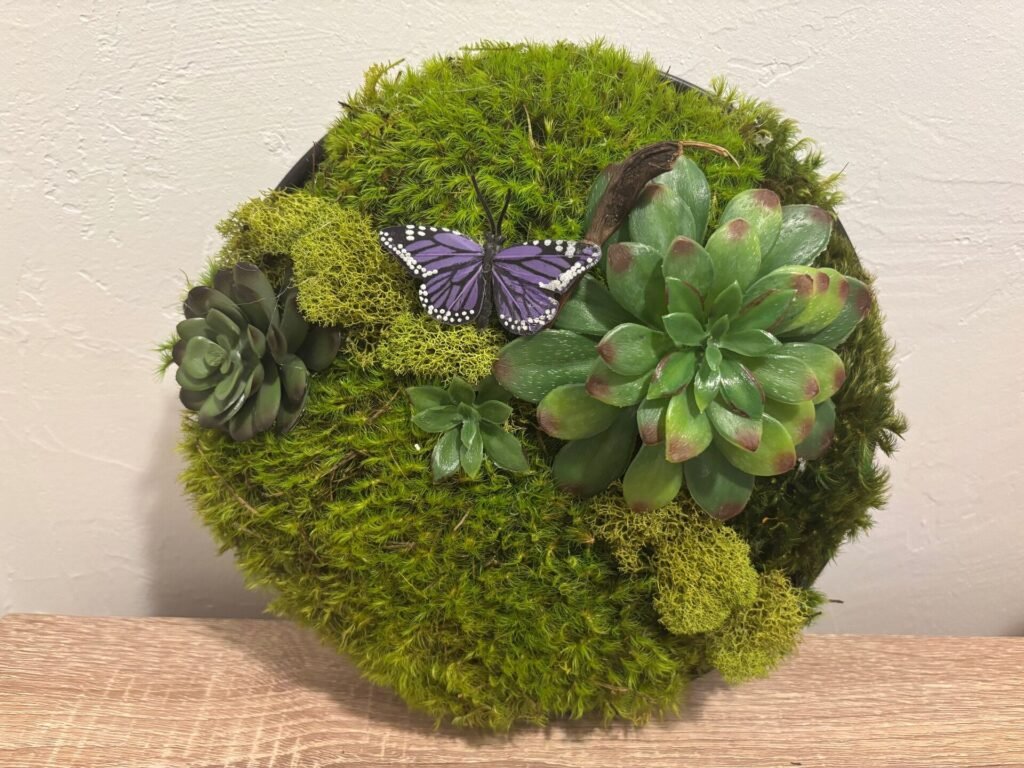
Lighting a moss panel is another decision that rewards careful thought. A picture light mounted above the panel will bring out the depth of the moss and cast gentle shadows across its surface. A backlit panel creates a different effect, making the moss glow from behind. Both approaches add a layer of warmth that a painted wall cannot match.
Practical considerations before you buy
Before you order a moss panel, there are a few things to check. The first is the wall itself. A lightweight moss panel can be hung with a standard picture hook, but a larger piece may need a wall anchor or a French cleat. The weight depends on the size of the board and the density of the moss, so ask the seller for the exact weight before you choose the hardware.
Dust is another factor. Moss does collect dust over time, just as any textured surface does. The easiest way to clean it is with a soft brush attachment on a vacuum cleaner on low suction. A gentle puff of compressed air also works. Avoid water or cleaning sprays because they can damage the preservative coating.
If you are renting, a moss panel is no different from any other wall hanging. It leaves no marks beyond the hooks or anchors you use. That makes it a low-risk way to add natural texture to a space that you cannot paint or renovate. A single preserved moss artwork can be taken down and moved to a new home without losing its appearance.
One other point worth noting is that preserved moss is not suitable for outdoor use. Rain, wind, and direct sun will ruin it quickly. Keep it indoors, away from drafts and heating vents, and it will look the same years later as the day you hung it.
The quiet role of texture in a restful home
Trends in interior design come and go, but the desire for a home that feels calm and safe does not change. Texture is one of the most effective ways to create that feeling because it engages the sense of touch even from across the room. A rough stone wall, a wool rug, a wooden ceiling beam, and a moss panel all do the same thing: they tell the brain that this space is not sterile, that it has depth and life.
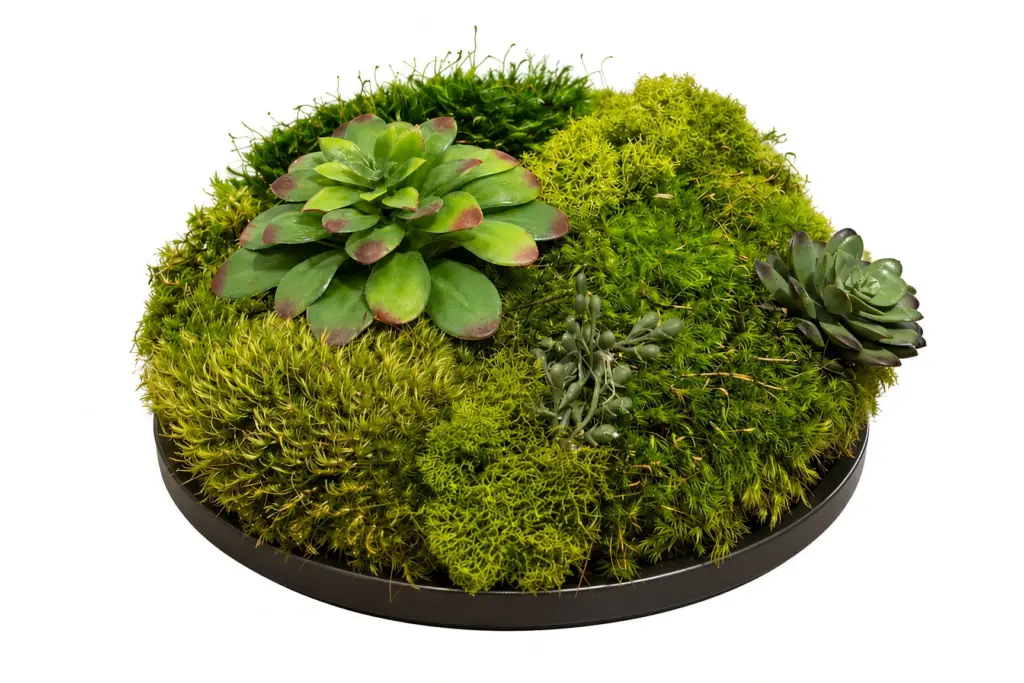
What makes green wall accents especially effective is that they combine texture with colour that the human eye finds restful. The two work together to lower the visual noise in a room. That is why a space with a single moss accent can feel more put together than a room full of carefully chosen furniture. The moss does not compete. It holds the room steady.
For anyone who has struggled to make a room feel finished without cluttering it, a moss panel is worth considering. It adds what a painting or a photograph cannot: a surface that changes with the light, a colour that soothes, and a reminder of the natural world outside the window. None of that requires a large budget or a renovation. It is a small addition that changes how the whole room feels.
If you are curious about trying it, start with a small panel in the room where you spend the most time. See how the light hits it in the morning and how it looks at night under lamplight. That one change may tell you more about your own sense of rest than any magazine spread ever could.